Key takeaways: To find suppliers in Vietnam you need three things: good lead sources (local directories, trade fairs, B2B platforms and referrals), a disciplined verification process (business registration check, factory audit, certificate checks, samples) and a clear plan for quality control, payment terms and shipping. This step-by-step guide walks through each stage and the mistakes first-time importers most often make.
Vietnam has become one of Asia’s most important manufacturing bases for apparel, footwear, furniture, electronics, coffee, seafood and home goods. Many buyers, though, find that it is harder to find suppliers in Vietnam than in China. Fewer factories are on the big English-language marketplaces, many good SMEs have basic websites in Vietnamese only, and the best manufacturers often get new customers through referrals.
This guide is written for importers in the UK, US, EU, Australia, Japan, Korea and beyond. It is based on our day-to-day work as a Vietnam sourcing agent and on official guidance from trade authorities. Follow the steps in order and you will cut the risk of wasted samples, missed deadlines and unreliable partners.
Table of contents
- Step 1: Define exactly what you need
- Step 2: Where to find suppliers in Vietnam
- Step 3: Build and screen a shortlist
- Step 4: Verify the company and the factory
- Step 5: Samples, pricing and negotiation
- Step 6: Contracts, payment and quality control
- Step 7: Shipping, duties and FTA benefits
- Red flags to watch for
- FAQ
- Sources
Step 1: Define exactly what you need before you look for suppliers
The fastest way to waste time is to contact factories with a vague request. Vietnamese manufacturers receive many enquiries, and they prioritise buyers who look serious and well prepared. Before you search, prepare:
- A product specification or tech pack: materials, dimensions, colours, finishes, packaging and labelling.
- Target quantities: first order and expected annual volume. Factories price and prioritise on volume.
- A target price per unit, ideally on a clear Incoterm such as FOB Hai Phong or FOB Ho Chi Minh City.
- Compliance requirements for your market, such as REACH and CE marking (EU), UKCA (UK), CPSIA and Prop 65 (US), food-contact rules or social audit standards (BSCI/amfori, SMETA, WRAP).
- Timeline: when you need samples and when goods must arrive.
A one-page brief with photos and a reference sample will get you far better replies than “please send your price list”.

Step 2: Where to find suppliers in Vietnam
No single source covers the whole market. The best results come from combining several channels.
Local business directories
Trang Vang Viet Nam / Yellow Pages Vietnam is the largest local B2B directory. Searching in Vietnamese (for example “công ty may xuất khẩu” for export garment companies, or “xưởng sản xuất đồ gỗ” for furniture workshops) often turns up many more small and medium factories than English searches do. Listings are self-declared, so treat them as leads, not proof. Industry associations are another good source. Many sectors have their own association (textiles, wood, leather and footwear, seafood, coffee) with member lists, and the Vietnam Chamber of Commerce and Industry (VCCI) and the government trade promotion agency (Vietrade) also publish business information.
Trade fairs in Vietnam
Meeting suppliers face to face is still one of the most effective ways to find suppliers in Vietnam. Major recurring events include:
- VIATT (Vietnam International Trade Fair for Apparel, Textiles and Textile Technologies), organised by Messe Frankfurt in Ho Chi Minh City, with a 2027 edition announced.
- Vietnam Expo, the long-running international trade fair held each spring in Hanoi, covering a wide range of consumer and industrial goods.
- Global Sources’ Global Sourcing Fair Vietnam, aimed at overseas buyers looking for Vietnamese manufacturers.
- Sector shows for furniture and home decor, food and beverage, and industrial products, many held at SECC in Ho Chi Minh City or I.C.E. in Hanoi.
Check the official organiser website for current dates before booking travel, as dates and venues can change from year to year.
B2B marketplaces
Alibaba, Global Sources and similar platforms list a growing number of Vietnamese suppliers. They are convenient for quick price benchmarking, but many listings are trading companies, and badges such as “verified” usually mean the platform checked the company’s registration, not its quality. Use marketplaces for leads, then verify independently.
Referrals and sourcing agents
Many of Vietnam’s best SME factories do almost no marketing because they are full with repeat customers. A local sourcing agent can reach them through personal networks, visit in person and speak Vietnamese with owners and line managers. That is often the quickest route for niche products or small and mid-sized orders. You can see how we approach this on our how it works page.
Supplier lists and research
Curated lists are a useful starting point. For example, our list of small and medium garment manufacturers in Vietnam profiles 18 factories by region, with their stated products, minimums and certifications.
Step 3: Build and screen a shortlist
Aim for 8–15 potential suppliers at first, then narrow down to 3–5 for detailed quotes. Send each one the same brief and a short questionnaire covering:
- Is the company a manufacturer or a trading company? If a factory, where is it and how many production lines does it have?
- What similar products do they make now, and for which markets?
- What are the MOQ, sample cost, sample lead time and production lead time?
- Which certifications and social audits do they hold, and can they share the certificate numbers?
- Do they have export experience, and do they handle export customs themselves?
How a supplier responds tells you a lot. Fast, specific and consistent answers are a good sign. Generic catalogues, prices quoted before seeing your spec, or reluctance to name the factory location are warning signs.
Step 4: Verify the company and the factory
Verification is the step most new importers skip, and it is where most problems start. When you find suppliers in Vietnam online, assume nothing until it has been checked.
Check the legal entity
Ask for the enterprise registration certificate (Giấy chứng nhận đăng ký doanh nghiệp) and tax code. You can look up registered enterprises on Vietnam’s National Business Registration Portal (dangkykinhdoanh.gov.vn). Confirm that the company name, address, legal representative and registered business lines match what the supplier told you, and that the bank account you will pay is in the same company’s name.
Audit the production site
A factory audit confirms that the facility exists, that it really makes your type of product, and that it has the equipment, workforce and quality systems it claims. A basic audit covers ownership, capacity, machinery, quality procedures, subcontracting and working conditions. If you cannot travel, an independent agent can do this. Our supplier verification and factory audit service sends a Vietnamese-speaking inspector on site and reports with photos.
Verify certificates
Ask for copies of certificates (ISO 9001, BSCI/amfori, WRAP, SA8000, OEKO-TEX, FSC, HACCP and so on) and check each one on the issuing body’s public database. Confirm the certificate number, scope, site address and expiry date.

Step 5: Samples, pricing and negotiation
Always pay for samples. Factories take paid sample requests more seriously, and the cost is small compared with the risk of a bad bulk order. A typical sequence is:
- Proto sample: checks the design and construction.
- Fit or revised sample: corrects measurements, materials or finishing.
- Pre-production (PP) sample: made with bulk materials. Once approved, this becomes your “golden sample” and the reference for quality inspection.
When comparing quotes, make sure they are on the same basis: the same Incoterm, packaging, labelling, testing and payment terms. The cheapest quote often leaves out items such as cartons, polybags, testing or inland trucking. Negotiate on total landed cost, not just unit price. Our pricing page explains what a sourcing agent costs compared with doing it yourself.
Step 6: Contracts, payment terms and quality control
Put it in writing
Your purchase order or supply contract should specify the product (with reference to the approved golden sample), quantity, unit price, Incoterm, delivery date, packaging and labelling, inspection standard (for example AQL 2.5 major / 4.0 minor), penalties for late delivery or defects, and ownership of moulds and designs.
Use safe payment terms
A common structure for new relationships is a 30% deposit with the balance paid after a satisfactory pre-shipment inspection and before the bill of lading is released. For larger orders, a letter of credit gives both sides more protection. Avoid paying 100% up front to a supplier you have not verified, and never pay into a personal or third-party account.
Inspect before you pay the balance
Pre-shipment inspection is your last chance to catch problems while the goods and your money are still in Vietnam. An inspector randomly samples finished, packed goods according to AQL, checks them against the golden sample and specification, and reports before you release payment. For new suppliers, a during-production inspection at around 20–30% completion can catch problems early. See our quality control service.
Step 7: Shipping, duties and free trade agreement benefits
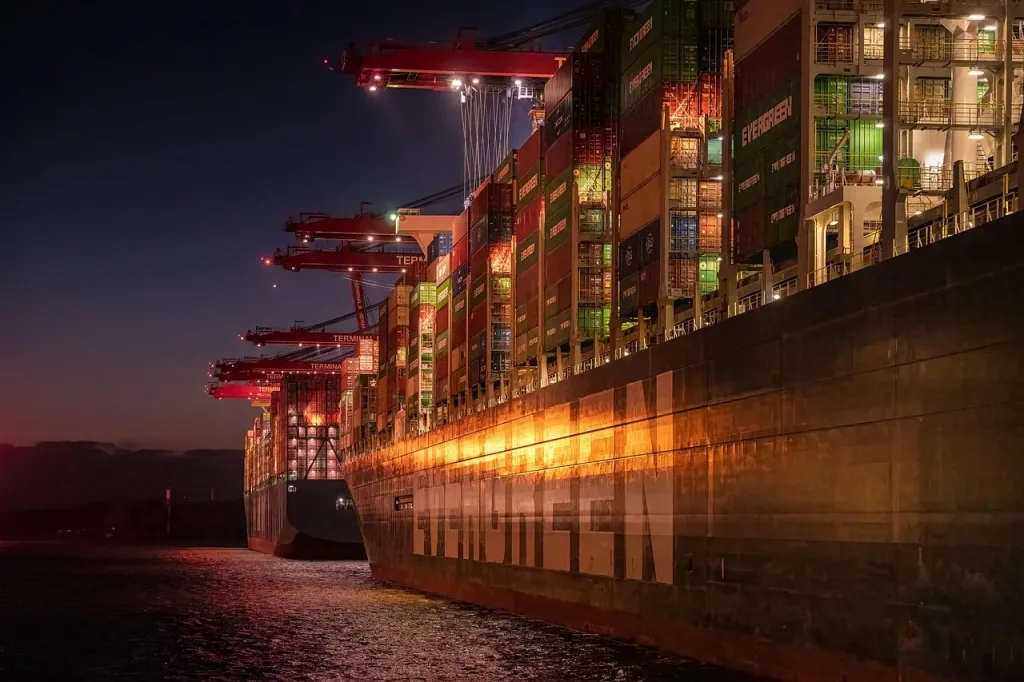
Logistics should be planned when you choose a supplier, not after production finishes. The main export gateways are Hai Phong in the north, Da Nang in the centre, and Cat Lai and Cai Mep–Thi Vai in the south, with international airports at Hanoi (Noi Bai), Da Nang and Ho Chi Minh City (Tan Son Nhat).
- Sea freight (FCL or LCL) is the default for most consumer goods. As a rough guide, port-to-port transit is about 3–4 weeks to US West Coast ports and around 4–6 weeks to Northern Europe and the UK. Times vary with routing, transhipment and season.
- Air freight and express suit samples, urgent replenishment and high-value, low-weight goods.
Free trade agreements
Vietnam’s trade agreements can make a big difference to your landed cost:
- EU: the EU-Vietnam Free Trade Agreement (EVFTA) removes or phases out duties on most goods that meet its rules of origin. The EU’s Access2Markets portal explains the product-specific rules and the proof of origin required.
- UK: the UK-Vietnam Free Trade Agreement (UKVFTA) largely replicates the EVFTA terms for UK trade, and both countries are also CPTPP members. GOV.UK publishes a summary of the agreement and guidance on claiming preferences.
- Australia, Japan, Korea, Singapore and others: preferences may be available under ASEAN agreements, RCEP, CPTPP or bilateral FTAs, each with its own rules of origin.
- United States: there is no US–Vietnam free trade agreement, so normal US duty rates apply, and US tariff policy toward imports has changed several times since 2025. Check the current HTS rate and any additional duties with US Customs and Border Protection or a licensed customs broker before you confirm an order.
Rules of origin matter. To claim a preference, the goods must qualify as originating, for example because of where key materials are produced. The supplier must also provide the correct proof of origin. Raise this at quotation stage, because it can affect which materials the factory uses. Our customs and global shipping team, working with sister companies UKShipping and 90000 Logistics, can quote door-to-door and advise on documents.
Red flags when you find suppliers in Vietnam
- The company name on the invoice or bank account differs from the one on the business registration.
- The supplier refuses a factory visit or third-party audit, or will only meet you at an office.
- Prices are far below every other quote, especially before they have seen your specification.
- Certificates cannot be found on the issuing body’s database, or the site address is different.
- Pressure to pay quickly, requests to pay a personal account, or sudden “change of bank details” emails, a classic invoice-fraud tactic.
- Samples that are clearly better than anything you see on the production floor.
None of these automatically means fraud, but each one should prompt more checks before you send money.
FAQ: how to find suppliers in Vietnam
What is the best way to find suppliers in Vietnam?
Combine several channels: local directories such as Trang Vang / Yellow Pages Vietnam, industry associations, trade fairs such as VIATT and Vietnam Expo, B2B marketplaces and referrals through a local sourcing agent. Then verify every shortlisted supplier before ordering.
How can I check if a Vietnamese company is legitimate?
Ask for the enterprise registration certificate and tax code and look the company up on the National Business Registration Portal (dangkykinhdoanh.gov.vn). Make sure the name, address and legal representative match, that the bank account is in the company’s name, and confirm the production site with a factory audit.
Do Vietnamese suppliers accept small orders?
Many small and medium factories do, especially in garments, furniture accessories and handicrafts, but minimums depend on the product and materials. Expect higher unit prices on small runs, and remember that material minimums (fabric, packaging, moulds) can set the real MOQ.
What payment terms are common with Vietnamese suppliers?
For new relationships, a 30% deposit with the 70% balance after a satisfactory pre-shipment inspection is common. Letters of credit are used for larger orders. Avoid paying 100% in advance to an unverified supplier.
Can I import from Vietnam duty-free?
Under the EVFTA (EU), the UKVFTA (UK), CPTPP, RCEP and other agreements, many goods can enter at reduced or zero duty if they meet the rules of origin and come with the correct proof of origin. The US has no FTA with Vietnam, so standard US duties apply.
Do I need a sourcing agent in Vietnam?
Not always, but an agent helps when you cannot visit, do not speak Vietnamese, need niche or small-volume suppliers, or want independent verification and quality control. A good agent should be transparent about fees and introduce you to the actual factory.
Let Vinacotrade find and verify your Vietnamese suppliers
We are a Vietnam-based sourcing agent and part of 90000 Group. We shortlist suitable manufacturers, verify their registration and factory, manage samples and negotiation, inspect goods before shipment and deliver factory-to-door through UKShipping and 90000 Logistics. Start with our product sourcing service.
Email [email protected], WhatsApp +84 866 888 089, or send us your product brief for a free consultation.
Sources
- GOV.UK – Summary of the UK-Vietnam agreement
- GOV.UK – UK-Vietnam Free Trade Agreement collection
- European Commission Access2Markets – Statement on origin (Vietnam)
- Vietnam National Business Registration Portal
- LawNet – How to look up enterprise information in Vietnam
- Messe Frankfurt – VIATT Ho Chi Minh City
- Vietnam Expo – About the event
- Global Sources – Global Sourcing Fair Vietnam
- US International Trade Commission – Harmonized Tariff Schedule

Pingback: Garment Manufacturers in Vietnam: Top 18 SME Factories